Sarvin Patel of Curie Co discusses Curie Co's technology, which works to replace chemicals with biodegradable enzymes
Posted on: 08/27/2023
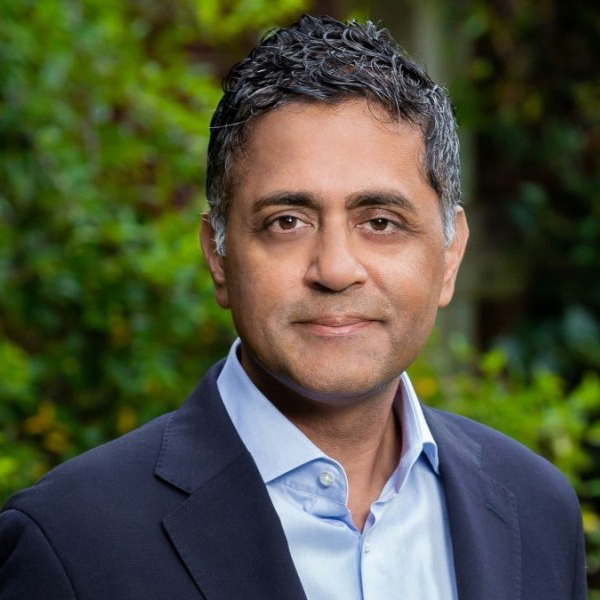
Sarvin Patel of Curie Co. - Podcast Summary
Sarvin Patel of Curie Co discusses Curie Co’s technology, which works to replace chemicals with biodegradable enzymes, reducing the amount of chemicals entering the environment by replacing them in personal care products.
Sarvin Patel of Curie Co. - Podcast Transcript
| Healy: | … hey, this is Healey Jones, VP of financial strategy here at Kruze Consulting. And I want to say thanks to our podcast sponsor ARC. At Kruze, we’ve got a number of clients successfully using ARC to manage their deposits, payments, access financing, all in one place. One of the things that ARC provides that’s really great is over $250,000 in FDSC coverage. Their insurance program goes beyond the standard limit, and it secures up to $5,250,000. So startups that have even more cash than that can go and access treasury solutions to provide yield and safety. If you’re a startup looking for a secure financial solution that can help you scale, please check out our sponsor ARC at arc.tech. |
| Singer: | So when your trouble’s are mountain in tax or accounting, you go to Kruze, from Founders and Friends. It’s Kruze Consulting, Founders and Friends, with your host, Scotty Orn. |
| Scott: | Welcome to Founders and Friends podcast with Scott Orn at Kruze Consulting. And today my very special guest is Sarvin Patel of CurieCo. Welcome, Sarvin. |
| Sarvin: | Thank you, Scott. I’m glad to be here. |
| Scott: | Yeah, me too. Glad you’re here. And you’re doing something really cool, and unique, and it combines hardcore science with products that people can all relate to in their normal life. So maybe just kind of retrace your career a little bit, and tell us how you got fired up about this company, and wanted to join? |
| Sarvin: | Yeah, absolutely. So I’m a chemical engineer by training, but that was many moons ago. And very quickly, I moved into getting my MBA, and kind of getting into strategy finance. I spent most of my career with Cargill. I feel lucky to have started there. Just a great company, meritocracy, global in its reach, and had a lot of really good mentors along the way. And I spent time in corporate development, M&A strategy. I spent time in Cargill’s food ingredient businesses. I then went into internal audit, so- |
| Scott: | I didn’t know that. |
| Sarvin: | Yeah. Sort of going off-road for a while, but it was really good for me. I was a 30, 40,000 foot person, and then I was getting in into the details. |
| Scott: | Yeah. |
| Sarvin: | And it was great, because I’m an engineer by training, so I was analytical, but this was getting into business processes, and it was beyond the financial auditing. It was going from operational audits, and inventory management, even looking at control risk of the organization. I would always go to the businesses within Cargill, and say, “I’m not here to audit you, I’m here to audit the process.” |
| Scott: | Yeah, yeah. |
| Sarvin: | You probably realize, that relaxes, that gets people to kind of think about, “Okay, we’re trying to protect the broader risks.” And my career with Cargill took me to Asia, that’s where I was responsible for risk management for all of Asia. I traveled to Cargill’s businesses in Papua New Guinea, Vietnam, China- |
| Scott: | That’s cool. |
| Sarvin: | India, all over. Learned a lot. And then when I came back to The U.S., I wanted to get into the commercial side of things, so I joined Cargill’s… Cargill is so big that they actually have an investment platform and it was called CarVal Investors. It’s now gone to AB, so it’s AB CarVal, but we invested in distressed securities, bank debt, bonds. |
| Scott: | Are you kidding me? I didn’t know that. |
| Sarvin: | Yeah. Yeah, it’s amazing. And it’s in industries that are not Cargill related, per se. So we were looking at deals in telco, in Argentina, and power plants, and [inaudible 00:04:03] Australia. So it was all very different, but looking at capital structure, how businesses get in trouble. And to me, that was fascinating, because I had spent this early part of my career in Cargill’s businesses that were very well-run, process-oriented, and then looking at investing in companies that got in trouble and distressed. And you had to roll up your sleeves and really dive in and understand them. |
| Scott: | Did you guys go in, and you take a position, and then actually be an activist shareholder? Or was it more of a financial play, or… ‘Cause if you have all this expertise at Cargill, we call it kaizen, continuous process innovation, did you go in, and actually help fix the companies? That would be pretty interesting. |
| Sarvin: | No, it wasn’t that active. Good question. It was more of us taking a position in the capital structure from a debt position, which is what we understood, and then looking at, “Can we get more value? Is there a way to restructure this? Can the business make it, or is it a structural issue, and there’s recovery value? So- |
| Scott: | Oh, yeah. Yeah, yeah. |
| Sarvin: | But I actually had interest to do exactly what you just brought up, which is, “How can you go into a company, and then actually now be a part of it? Have more of an ownership feeling.” And so I had looked at various deals, and at one point, to build something, decided to take more of an operating partner role in an investment of a private equity deal. So that’s when I left after 16 years, and I actually signed up to try to grow a fertilizer platform business that we bought distressed debt, we restructured it in Brazil, it was a Canadian-based company. And then we did an acquisition, because Nutrien had to get rid of one of their key assets in Idaho as part of an antitrust thing. And so that allowed me to get under the tent a little bit about it in investments. I was humbled in that you really learn what you don’t know, because as an investor, as a principal investor, thinking I knew, and I could get into the details here, when you actually go run something, and you understand all the risks that can come up, you realize what you don’t know. And- |
| Scott: | Oh God. |
| Sarvin: | It was incredible. And it would be left hand, right hand. I mean, it would just come out of I everywhere. And to me, it was more about being flexible to be able to have conviction for where you’re going. And then along the way, can you be flexible? Can you find ways to mitigate risk? Can you find backup plans that allow you to keep moving forward? Because the guarantee is that you’re going to face a challenge. If you’re moving, you face… Why do you face challenges? Because you’re moving. |
| Scott: | Yeah. |
| Sarvin: | If you’re stationed, you’re- |
| Scott: | Well, I feel like that’s the spice of life, ‘cause I switched from venture capital and investment banking to joining Vanessa eight years ago at Kruze, I was the third person, and now we’re 160 people, and it was the ride of a lifetime, and all the resourcefulness you’re talking about, and figuring things out, and I had a great partner, but I’m so glad I did that. I could have sat in venture capital for another 20 years, and collected paychecks, and pontificated about a lot of stuff, but now I know how things work, and how to build things now. |
| Sarvin: | That’s awesome. |
| Scott: | I mean, the cool thing is you came from a place of operational excellence into then, “Hey, we’ve got to fix this distressed entity, and I can apply all that.” And then I don’t know what the rest of your career timeline is, but now you’re at an early stage startup, right? |
| Sarvin: | Yeah. |
| Scott: | Curie is pretty early. |
| Sarvin: | Yeah, we’re very early. So for me, I realize I enjoy that. I like being in the chaos, and building things. So Curie’s very early… We’re post-series A, so when I joined, I met Erika Milczek who’s the founder, and brilliant scientist, and she worked with Merck prior to CurieCo, and she went to get a Brazilian blowout, and actually felt her eyes watering. So she’s like, “What’s in here? What are the chemicals?” And realized it was formaldehyde. |
| Scott: | Oh my god. |
| Sarvin: | Yeah, she was like, “This is crazy.” And so started to investigate, do some research on her own, and she was in Merck’s process chemistry group, really working with enzymes, doing a lot of novel things around enzymes and enzyme engineering. And so she decided there’s a solution here that’s bio-based one to be able to go after these legacy petrochemical-based preservatives. And formaldehyde’s been long replaced, parabens are something else that you’ve probably seen a lot of news about, paraben-free and things like that. There are a lot of other chemicals that are now under scrutiny. There’s increasing retailer pressure and consumer pressure. So she started the company, got some initial proof of concept worked on, and then when I heard her story, for me, it brought me back full circle, I’m also an environmental engineer, so it brought me back to say, “Hey, we can do something really good, develop a sustainable product, have a pretty big impact. Here’s a brilliant entrepreneur who’s earlier in their career, and I would love…” For me, it was a moment to give back. So what motivated me was something different, in the sense that, “How can I be a part of this, and help in some way?” I’m not a technical person, but maybe I can bring some of the business background, maybe I can help bring in my network and things like that. That’s what motivated me, and it’s been honored learning for me. I’ve learned a lot from both Erika and the team. I’ve learned a lot about industrial biotech, which I knew a little bit about, but I got to know a lot more about. I wear two hats, so I’ve given my financial background, I have the CFO hat that, actually, led us to Kruze. And so when I came in, I was like, “Okay, yeah, I’ll do the finance, I’ll roll up my sleeves, I can do this, and then take on the COO hat, and responsible for commercial and things like that.” But I wanted to find a good partner. And so for me, the first thing I was like, “Okay, I’ve got IT, and I’ve got finances, two big areas, where things can go wrong, and if they go wrong, can just create issues and divert energy away from the business to do it.” |
| Scott: | Yeah. |
| Sarvin: | So we did interviews, we met a bunch of different firms in both those areas, including… And we happened upon Kruze, and- |
| Scott: | Awesome. That’s amazing. By the way, this is not a paid commercial here. |
| Sarvin: | No, no worries. But I think something that I had mentioned is what we like to do is something I brought to CurieCo, is a process where we assess our partners. |
| Scott: | That was super cool. |
| Sarvin: | Yeah. |
| Scott: | Super cool. |
| Sarvin: | The genesis of that really is, I remember in Cargill, here’s 150 year old company, and humble in many ways in how they approach, and I remember there was this talk around being a partner of choice. And we, as a company, Cargill, wanted to be this partner of choice. And I remember, I was like, “What does that mean?” And we wouldn’t think about that, “What does that really mean?” And then as a supplier mostly to large customers, I kind of understood what that was starting to mean. When I was in the fertilizer company, I started to say, “Okay, we are buying sulfur from… And it’s a commodity, but our plant needs to get really good quality sulfur, and it needs to get it on time. And yes, we can act transactional to the parties we’re dealing with, but why don’t we try to figure out how we can get a deeper relationship?” |
| Scott: | Yeah, yeah. |
| Sarvin: | So that led to this scorecard, where we would actually measure certain things, and then communicate that. Because to me, why build a relationship, and why invest the time if we are going to be very transactional? If it’s not working, you know quickly, it’s not working and you move on. But if you’re invested in it, it’s good for both parties. |
| Healy: | Hey, this is the VP of financial strategy at Kruze, jumping in to thank our sponsor of this podcast, ARC. At Kruze, we have a number of clients who are successfully using ARC’s FinTech tools to store deposits, manage payments, get financing, earn yield, all in one place. But another thing that’s important about ARC is that they have a heightened security and safety feature, because they partner with globally recognized banks, they’re able to offer an FDIC coverage over $250,000. In fact, they offer up to $5,250,000 in FDIC coverage. And if you have more cash than that, they have treasury solutions, they can provide yield and safety for even more money. So if you’re looking for a comprehensive financial solution that can help you scale, check out Arc, go to arc.tech. Thanks again to our sponsor, Arc. |
| Scott: | I totally agree, and I always think, it can be a commodity if you let it be a commodity, but that has a negative connotation with me. And I think the best business relationships are always win-win. And for those who don’t know, you sent us, basically it was a summary of our relationship, and [inaudible 00:14:50], this is what you’re talking about. We were blown away, and thought it was so cool. And actually, I think we’re going to implement that on the Kruze side for- |
| Sarvin: | Oh, that’s really cool. |
| Scott: | ‘Cause, just like you, we have a key IT partner, and a key recruiting partner, and things that make our company go. [inaudible 00:15:08] it was really beautiful actually. And randomly, I know Bill [inaudible 00:15:11] from Kruze reached out… I think he emailed you yesterday or day before, didn’t even know we’re talking, and was like, “Hey, can I get a version of that?” Or something- |
| Sarvin: | Oh, that’s cool. I mean, it’s great to hear, and I appreciate the feedback on that. |
| Scott: | Not only did it make us feel good, but it’s going to help us be better. So anyways, that’s cool. The one thing I was going to say on CurieCo by the way is, you talked about all these reasons why you wanted to join, but I also think there’s something reformulating, or innovating on these chemicals. You’re going to touch millions and millions of people without… Maybe they’ll never know it, right? |
| Sarvin: | Correct. |
| Scott: | But you and the company, so this is your mission, this is… I mean, it’s really cool that you can… It’s going to touch so many lives out there, and where else… You look at a role, or a job, and it’s like, “Well, am I helping people? Do I matter?” |
| Sarvin: | Right. |
| Scott: | And I think that’s what was super cool about CurieCo is that you, Erika, the team, you’re actually going to redo some stuff that’s going to maybe save lives, or maybe just help people not get sick, or whatever it is. It’s very impactful. |
| Sarvin: | Yeah, thank you. Yes, that is very motivating for us. We’re focused initially on preservatives, and why preservatives? They’re everywhere. So to your point, we’re really concerned about human health and planet health. Chemical preservatives, they go down the drain, they’re in the products you use, they’re in everyday products. They’re in medicines we take, the food we eat, the products we put on our face and body, and then they end up in our waterways eventually. And that can persist at low levels. You’ve heard the superbug problems and things like that, so what happens is, when you get low level of chemicals persisting in the environment, you create resistance for that. And our enzymes, enzymes are protein, they’re bio-based molecules, so they break down into simple amino acids. Think of it [inaudible 00:17:22] fish food. |
| Scott: | Yeah, that’s cool. |
| Sarvin: | Yeah, that’s cool. And enzymes are catalytic, so that’s really cool, because if you think of a chemical, it’s a stoichiometric plate, have a chemical, it has a certain function, when it gets used up, it’s used up. Whereas an enzyme has a turnover concept, so it’s catalytic. |
| Scott: | Interesting. |
| Sarvin: | Yeah, it’s catalytic. So it can keep working, therefore, you need less of it, relatively. |
| Scott: | It regenerates every time it’s used or something like that. |
| Sarvin: | Basically. |
| Scott: | Is that the right way of thinking about it? |
| Sarvin: | Yeah, think about it, it does its function, it doesn’t get consumed in doing that, eventually the activity will diminish, but there’s a turnover concept. And given it’s catalytic, we can use less of it, and therefore we can be cost-competitive. So one of our visions is, how do we do sustainable care for all? As you were saying, how do we touch a lot of the world and the product? |
| Scott: | Yeah. |
| Sarvin: | And the way to do that is, we have to be cost-competitive. And enzymes being catalytic allow us to at least start down that journey. It’s a long process, it’ll be different products and innovations. |
| Scott: | Well, you also talked about though, the pressure on retailers, and consumer choice changing. It’s going back to that you can be a commodity if you want to, you need to be price-competitive in this world to exist as a company- |
| Sarvin: | Correct. |
| Scott: | But if you’re getting close, and then there are all these other externalities that people care about that give you the leg up, that’s what’s so cool about innovative companies like you folks, as long as you’re close, you’re going to get… And the trends are working your way, and the retailers care about that stuff, and consumers care about it, you’re going to get picked. And then you have an additional opportunity to rework your cost curves, and- |
| Sarvin: | Correct. |
| Scott: | And get more scale, and then surpass whatever the cost curve is. |
| Sarvin: | Yeah, that’s a great point. I mean, our mantra is MVP, what’s our first product, and let’s get it out there, and get it in use. And our platform is for enzyme engineering. It is to do what you’re saying, Scott, it’s, how do we come up with the next enzyme that can do this different functionality? |
| Scott: | Yeah. |
| Sarvin: | And our core expertise is that enzyme engineering, how do we take enzymes and engineer in specificity, and allow these enzymes to do certain things that legacy chemicals can do basically, but do it maybe faster, or better. But we’re a product company, so we need to get our product out to the market. |
| Scott: | So it takes one proof of concept or two proof of concepts, and then the money starts flowing. |
| Sarvin: | Right, yeah. |
| Scott: | And by the way, you have the Cargill experience where you’re selling to giant companies, but you guys may go, “I don’t actually know the strategy of the company.” Maybe you go direct, and you’re a product company, or maybe you also replicate the Cargill strategy, and you power Procter & Gamble, or Clorox, or those companies- |
| Sarvin: | Yeah, good question. |
| Scott: | Customer products too. |
| Sarvin: | I mean, we won’t talk about specific names obviously, but= |
| Scott: | I’m making those names up by the way, I have no idea who you’re working. So if I got too close to the arrow there, or the bullseye, apologies. |
| Sarvin: | No worries. That’s fine. Correct. Our strategy is B2B, we’re not developing that product that’s going to be in the consumer’s hand, so we’ll be behind the scenes, we’ll be in the products, unseen, but we’re doing that job of, how do we extend shelf life today? And with supply chain and all those issues that are out there, how do we extend shelf life, which is about protecting health and personal health for people using products? |
| Scott: | Yeah. |
| Sarvin: | And we have large multinationals we’re working with to do our beta testing and products. That’s great, because those large companies push us to make sure our standards for how we’re manufacturing, and thinking about safety, and all of those things. The bar is set with these large players, and then we’re working with the innovative, they’re innovative, and then there’s innovation happening at the second tier, and the indie brands, they’re coming up with their, “Hey, this is natural.” And we want to be able to be a solution for even those indie brands who are coming in, even the mid-team. |
| Scott: | I went to business school at Kellogg, which is the marketing- |
| Sarvin: | Awesome. |
| Scott: | And all those people, most of them went to work for consumer product companies, and the indie brands, that’s their point of differentiation- |
| Sarvin: | Correct. |
| Scott: | A lot of times, we’re natural, we’re healthier, you can feel good about putting this on your baby, or something like that. I know that’s how we consume products in our house. We’ve got a kid, and we’re very careful about what products we use with our kid. |
| Sarvin: | [inaudible 00:22:36] |
| Scott: | That’s the cool thing about now is, everyone’s more educated people are looking for those type of products, the big companies understand that now, and so it opens up opportunities for folks like you. |
| Sarvin: | Yeah, thank you, Scott. Interesting, you talk about the label, and how you look at things, and what’s happening, and we did some research between Europe and U.S. for example, just initially, how are products… How are people looking at it? What stands out? And there’s a lot of preservative-free, or the no parabens, or no… More from a negative standpoint. And then there’s some movement towards positive, but there’s a gap in what can you talk about in a positive way. And we hope to be on that side, and say, “Hey, we have a bio-based alternative to be able to extend shelf life.” |
| Scott: | It’s also a hard science problem, so there’s a lot of, as an investor, thinking, “If they can crack this code there’s real defensible IP here, and this company is going to be valuable, and there’s a clear need in the market, and it resonates with the consumer.” So I think it’s really cool what you’re working on, it’s really neat. |
| Sarvin: | Thank you, Scott. |
| Scott: | I should respect your time here, ‘cause we could probably talk for another 20 minutes here, but maybe tell everyone how to reach out. Maybe the Kellogg alums are listening to this, and they’re like, “Hey, this sounds awesome. I need to get this into my product.” How do they reach out? How do they work with you? How do they work with Erika? What’s the contact- |
| Sarvin: | Yeah, we appreciate it. We’re going to do a product launch here coming up soon, so we hope to get some samples out, and so I would say please keep an eye out, probably in the next couple of months, there’ll be a launch talking about our product, and more about that. Our website is www.curieco.com. That’s where you can go and learn more about the company, and eventually, that’s where you’ll see a way to contact us, and get your hands… If you’re a formulator out there, I’d love to have you try our product, and see how it works. There’s no silver bullet in this sort of space, we want to be an enabler, and we work well with other molecules out there, and so would love to have formulators, other businesses that are working with finding a preservative solution to come connect with us. |
| Scott: | That’s awesome. |
| Sarvin: | You can also just connect with me on LinkedIn, that’s a great way. Send me a message, I’ll make sure you get connected to the right person. |
| Scott: | Love it. Well, I’m excited. We were talking before I turned the recorder on, but this is one of the best parts of my job, talking to folks like you, and hearing what you’re doing, and I love it. And thanks for teaching us something about the supplier evaluation process that was really cool to get. And I’m just excited for CurieCo, and give everyone my best. |
| Sarvin: | Thank you. Thank you, Scott. And we appreciate you as a really key partner. |
| Scott: | Ah, thanks, man. |
| Sarvin: | Thank you. |
| Scott: | Thank you. |
| Sarvin: | Yeah. Awesome. Okay. |
| Singer: | So when your trouble’s a mountain in tax or accounting, you go to Kruze, from Founders and Friends. It’s Kruze Consulting, Founders and Friends with your host, Scotty Orn. |